

Kitchen Renovation Timeline: A Week-by-Week Guide for GTA Homeowners
Introduction
"How long will this take?" is one of the first questions homeowners ask when starting a kitchen renovation. It's also one of the most variable — because the honest answer depends on several factors specific to your project.
That said, most kitchen renovations in the GTA fall within a predictable window, and understanding why each phase takes the time it does will help you plan realistically and avoid the most common scheduling surprises.
Here's a practical, week-by-week breakdown of what a typical kitchen renovation involves — and what affects the timeline at each stage.
Typical Kitchen Renovation Duration
For a standard kitchen renovation in the Greater Toronto Area — including new cabinetry, countertops, tile backsplash, lighting, and plumbing fixtures — expect a total timeline of 3 to 6 weeks from the start of construction.
This estimate assumes:
Cabinets have been ordered and delivered before demolition begins
Countertop templates are taken after cabinet installation
No major structural changes (removing load-bearing walls adds 1–2 weeks)
Permits, if required, are secured before work starts
The 3 to 6 week range accounts for variation in project scope, material lead times, and the condition of what's discovered behind existing walls.
Before Construction Starts: The Planning Phase
Most of the timeline surprises in kitchen renovations don't happen during construction — they happen (or are avoided) in the weeks before it begins.
Design and Material Selection (2–6 Weeks Before Construction)
Cabinet lead times are the single biggest scheduling variable in kitchen renovations. Semi-custom and custom cabinets typically require 3 to 6 weeks from order confirmation to delivery. Stock cabinets are available faster but offer limited sizing options.
Countertop materials also have lead times. Quartz and engineered stone typically require 2 to 3 weeks from template to installation. Natural stone like quartzite or marble may take longer depending on slab availability.
The practical implication: don't schedule construction to begin until your cabinets are confirmed for delivery. Many renovation delays stem from starting demolition before materials are secured.
Permits (If Required)
Permits are required when kitchen renovations involve changes to electrical panels, new plumbing rough-ins, or structural work such as removing a wall. Cosmetic renovations — replacing cabinets, countertops, and fixtures in their existing locations — generally do not require permits.
In Richmond Hill and the broader York Region, permit processing typically takes 2 to 4 weeks once an application is submitted. Your contractor should clarify permit requirements during the initial assessment and factor this into the project schedule.
Week-by-Week Construction Timeline
Week 1: Demolition and Rough-In Work
Construction begins with controlled demolition: existing cabinets, countertops, flooring (if being replaced), and tile are removed. The space is cleared to the studs and subfloor.
Once the existing materials are out, rough-in work begins. This includes:
Electrical: adding or relocating outlets, installing dedicated circuits for appliances, rough-in for new lighting
Plumbing: relocating or adding supply and drain lines if the sink or dishwasher position is changing
HVAC: adjusting ductwork if layout changes require it
Rough-in work must be inspected and approved before walls are closed — a step that adds 1 to 3 business days depending on municipal scheduling.
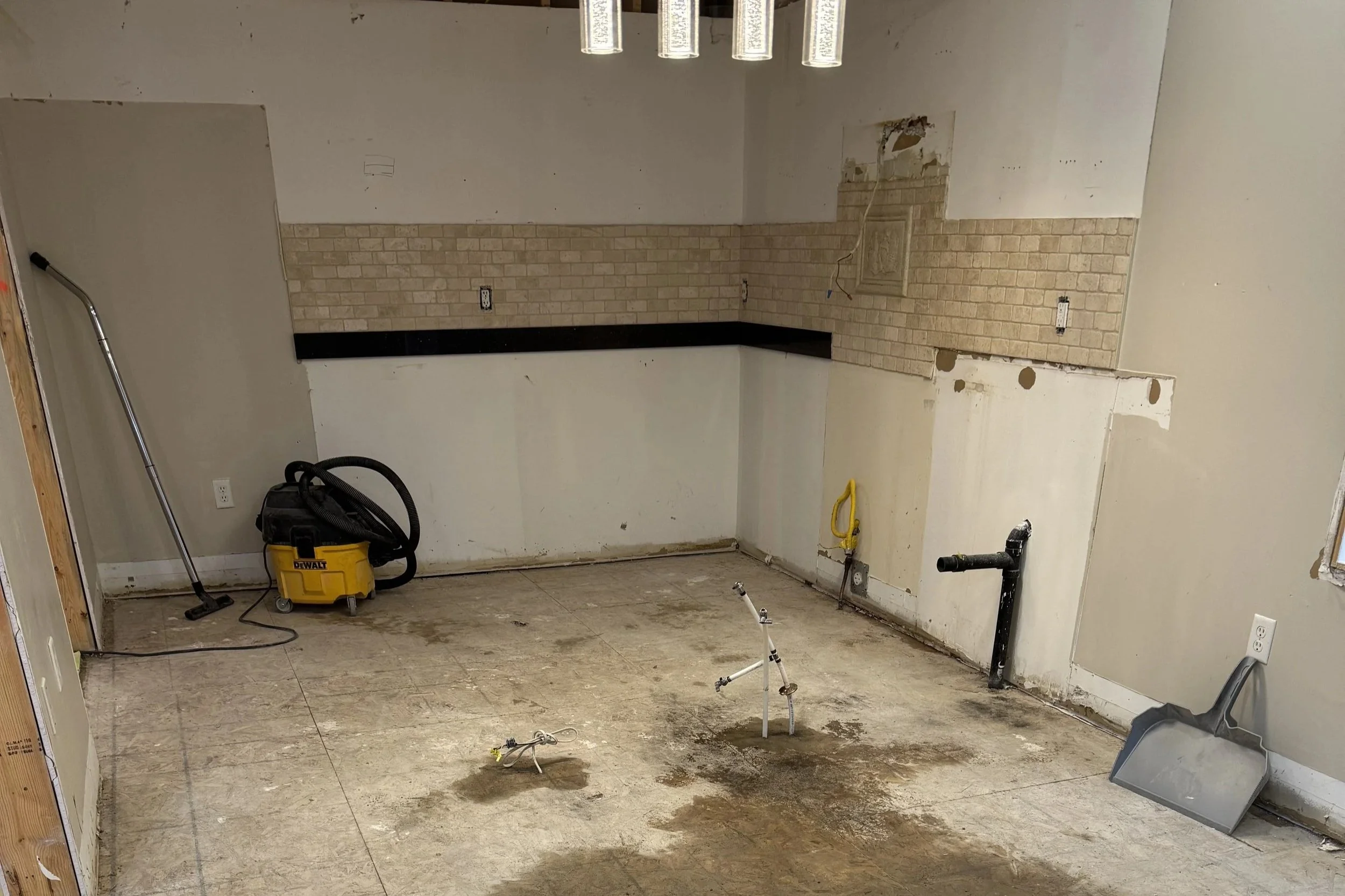
Demolition progress in Markham Home
Week 2: Drywall, Priming, and Cabinet Delivery
After inspections pass, drywall is patched or replaced, taped, and sanded. This stage also includes priming the walls before cabinet installation.
Cabinet delivery ideally aligns with the end of Week 1 or beginning of Week 2, so they are on-site and ready to install immediately after the space is prepared. Good project scheduling minimizes the gap between delivery and installation.
Week 3: Cabinet Installation
Cabinet installation is a precision trade. Upper cabinets are hung first, then base cabinets are installed and levelled. For a standard-sized kitchen, cabinet installation typically takes 2 to 4 days.
Once cabinets are installed, the countertop template is taken. This is a critical measurement step — the template captures the exact dimensions of the countertop after cabinets are set in their final position. Fabrication then begins.
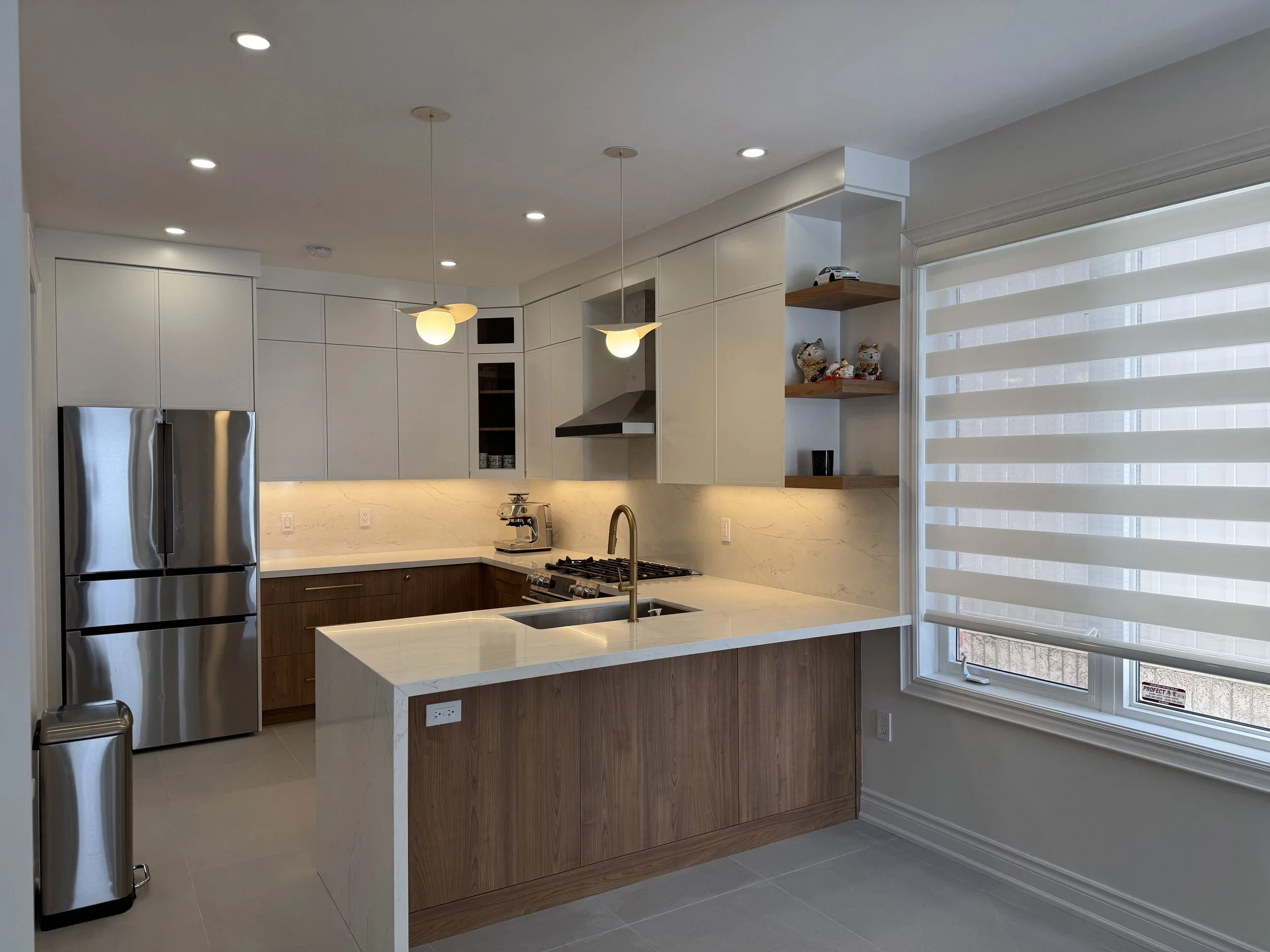
Week 4: Countertop Fabrication and Plumbing Fixtures
This week often involves waiting for countertop fabrication, which typically takes 7 to 14 business days from template. While fabrication is underway, other work can proceed:
Tile backsplash installation (if countertops are not required first for layout reference)
Under-cabinet lighting rough-in and fixture preparation
Appliance delivery and rough positioning
Hardware installation on cabinets
Week 5: Countertop Installation and Finishing Trades
Countertop installation is a 1-day process. Once slabs are set, the sink is cut and plumbing connections are completed. Appliances are connected and tested.
Finishing trades during this week typically include:
Electrical: installing light fixtures, switch plates, and outlet covers
Backsplash grouting and sealing (if tile was installed earlier)
Touch-up painting
Flooring transition strips and base mouldings
Week 6: Detailing, Inspection, and Handover
The final week is focused on details that determine the quality of the finished result: cabinet alignment and hinge adjustments, silicone bead application at backsplash and countertop joints, hardware calibration, and thorough cleaning.
A final walkthrough with the project manager ensures every element meets the standard before handover. Any punch list items are completed during this stage.
What Extends a Kitchen Renovation Timeline
Several factors consistently push kitchen renovations beyond the standard 3 to 6 week window:
Structural Changes
Removing a load-bearing wall adds significant complexity — engineering drawings, structural beam installation, temporary support, and inspection. Budget an additional 1 to 2 weeks for projects involving structural changes.
Unexpected Conditions
Older GTA homes regularly reveal plumbing that needs upgrading, outdated electrical panels, or water damage behind existing finishes. When discovered during demolition, these issues must be resolved before the project can continue. Setting aside a 10–15% contingency in both budget and schedule is a standard professional practice.
Material Delays
Supply chain delays, incorrect orders, or damaged materials on delivery can push back specific phases. The best protection is ordering materials early and confirming lead times before construction starts.
Living at Home During a Kitchen Renovation
Most homeowners remain in their home during a kitchen renovation. With proper planning, this is manageable.
Practical tips:
Set up a temporary kitchen space: a countertop, microwave, kettle, and a mini fridge in a different room
Stock up on groceries that don't require cooking in the first 1–2 weeks
Discuss a daily work schedule with your project manager so you know when the team will be on-site
Expect dust, especially during demolition and drywall — cover furniture in adjacent rooms
The Nuance Approach to Scheduling
At Nuance Design Build, every kitchen project is assigned a dedicated project manager who coordinates all trades and material deliveries. Our clients receive a written schedule before construction begins, and we update them at each major milestone.
The goal is simple: no surprises. The timeline we present at the start reflects the actual sequence of work — not an optimistic estimate that falls apart in Week 2.
If you're planning a kitchen renovation in Richmond Hill, Markham, Vaughan, or the surrounding GTA, we're happy to discuss your timeline and scope in a free initial consultation.
