
Open Concept Kitchen vs. Closed Kitchen: Which Is Right for Your Home?
Introduction
Walk into almost any Richmond Hill & GTA home built before 2000 and you'll find the same thing: a kitchen tucked behind a wall, separated from the dining room and living area, designed for a time when cooking was kept out of sight.
Today, that wall is the first thing most homeowners want gone.
But before you call a contractor, it's worth slowing down. Open concept living has real advantages — but so does a properly designed closed kitchen. The right choice depends on your home's structure, your family's lifestyle, and what you're actually trying to solve.
In this guide, we'll walk through the honest trade-offs of each layout so you can make a decision you'll be happy with ten years from now.
A Quick History: Why Closed Kitchens Were the Standard
The enclosed kitchen was the norm for most of the 20th century. Cooking was considered messy, loud, and not suitable for a formal living or dining space. Homes were built with separate "zones" — a practical design that made sense for the era.
The shift toward open concept layouts picked up pace in the 1990s and accelerated through the 2000s. HGTV, home staging culture, and a broader desire for communal living spaces drove the trend. Today, open concept is often the default expectation — but that doesn't mean it's always the right call.
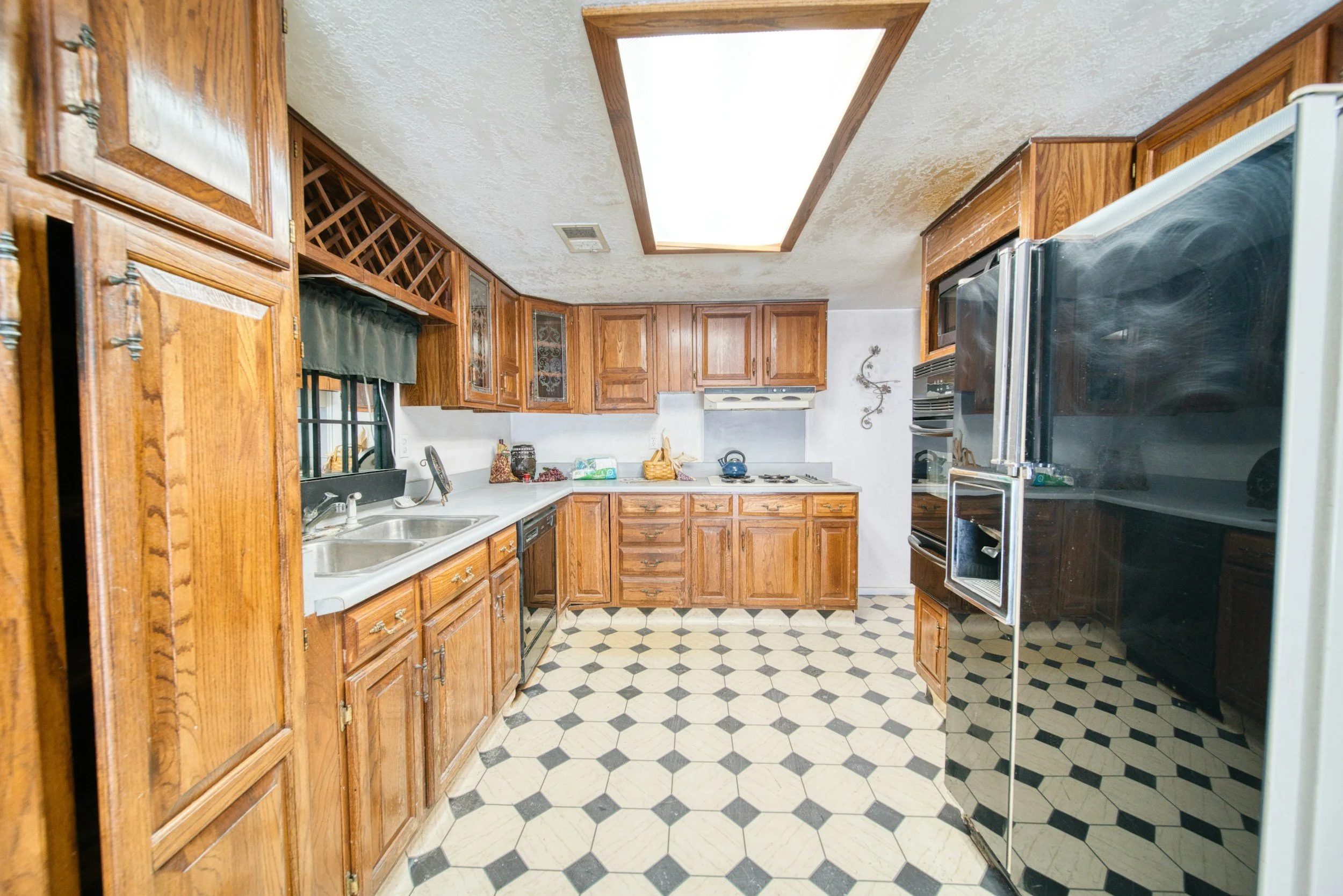
Typical old kitchens built before 2000
The Case for Open Concept
There are genuine reasons why open concept kitchens have dominated renovation requests across the GTA for the past two decades.
Visual Space and Light
Removing a wall between the kitchen and living area immediately creates a sense of volume, even if the total square footage hasn't changed. In smaller GTA homes — where 1,200 to 1,800 sq ft is common — this perception of space can significantly change how the home feels and functions.
Natural light also flows more freely. A kitchen that once felt dim can benefit from windows in adjacent rooms once the wall comes down.
Better Social Flow
For families with young children, an open concept layout means the cook stays connected to what's happening in the rest of the home. Whoever is preparing dinner can still watch the kids, follow a conversation, or monitor the TV. It's a practical advantage that many homeowners only fully appreciate after the renovation is complete.
Entertainment and Hosting
If you entertain regularly, an open kitchen is almost always the better layout. Guests naturally congregate near the kitchen during gatherings, and an open design means the host isn't isolated while preparing food. The kitchen becomes part of the event rather than a backstage area.
Resale Value
In the current GTA real estate market, open concept layouts are strongly preferred by buyers. If resale is a consideration within the next 10–15 years, removing a non-structural wall between your kitchen and living space is likely to increase your home's appeal and market value.
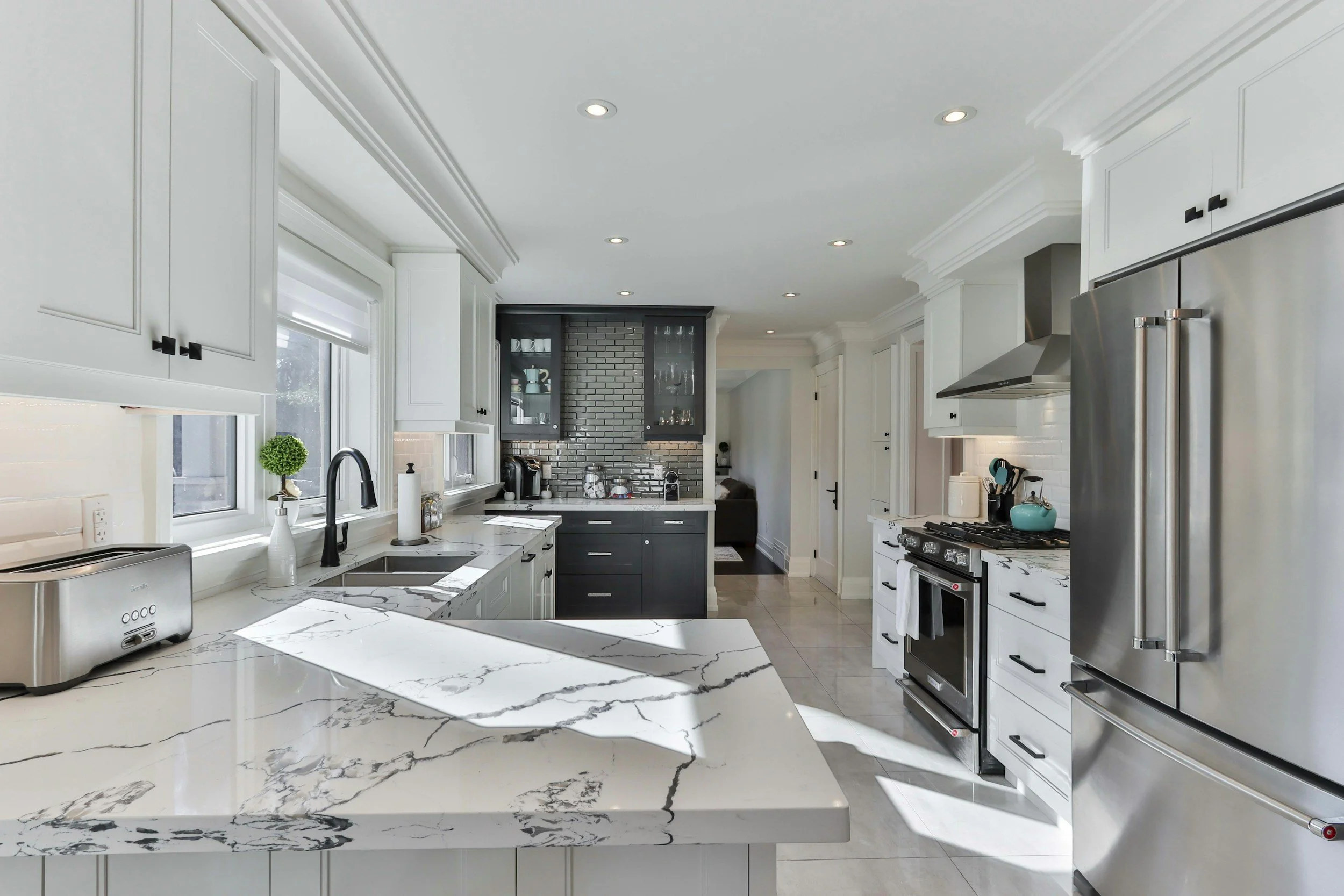
Open concept kitchen renovated in Thornhill.
The Case for a Closed Kitchen
Open concept has its critics — and for good reason. The layout comes with real functional trade-offs that are often downplayed in renovation media.
Odour and Air Quality Control
A closed kitchen contains cooking smells within the space. With an open layout, the smell of last night's fish or a strongly spiced curry moves freely through the entire main floor. Range hoods help, but they don't eliminate the issue entirely. For households that cook frequently with strong aromatics, this is a legitimate concern.
Noise Separation
Pots, appliances, dishwashers, and exhaust hoods generate real noise. In a closed kitchen, that sound stays in the kitchen. In an open layout, it competes with conversation, television, and any other activity happening nearby. If your household includes someone who works from home or has young children who nap during meal prep, this trade-off deserves serious consideration.
Visual Clutter
An open kitchen is always "on display." Dishes in the sink, groceries on the counter, and mid-prep mess are visible from the living and dining areas. Some homeowners adapt quickly; others find it a persistent source of stress. If you prefer a clean separation between cooking space and living space, a closed or semi-closed layout may better suit your household.
Structural and Budget Reality
Not every wall can be removed. In many GTA homes, the wall between the kitchen and an adjacent room is load-bearing — it carries structural weight from the floors above. Removing a load-bearing wall is possible but requires engineering assessment, a structural beam installation, and proper permitting. This can add $8,000 to $20,000 or more to a renovation, depending on the span and complexity.
Before committing to an open concept plan, a professional site assessment is essential to understand what your specific home will allow.
The Middle Ground: Semi-Open Layouts
Many GTA homes land somewhere between fully open and fully closed. A peninsula or partial wall can define the kitchen zone while still allowing visual connection to the living area. This approach retains some of the noise and odour separation of a closed kitchen while improving sightlines and social flow.
An island with seating can create a similar effect — drawing guests into the kitchen space without fully dissolving the boundary between cooking and living areas.
In many of our Richmond Hill & GTA projects, a semi-open layout ends up being the most practical and visually satisfying solution for the home's specific layout.
Questions to Ask Before You Decide
Is the wall between your kitchen and living space load-bearing? (A contractor or structural engineer can assess this in under an hour.)
How often do you cook, and with what ingredients? Heavy aromatic cooking may shift the balance toward a closed or semi-closed layout.
Do you have young children at home now, or plan to? Open sightlines are a safety advantage during the early years.
Is your household sensitive to kitchen noise — especially if someone works from home?
What are your resale plans? Open concept tends to serve GTA resale well.
What Nuance Recommends
There's no universal right answer. The best kitchen layout is the one that matches how your household actually lives — not what's trending on Instagram or what a neighbour just did.
What we consistently see in our projects is that homeowners who are happiest with their renovation results are the ones who thought through the functional trade-offs before making design decisions. The visual outcome matters, but how the space performs over years of daily use is what you'll actually live with.
If you're trying to decide, a free consultation with our team is a practical first step. We'll assess your home's structure, talk through your family's habits, and give you an honest recommendation — not just the one that's easier to sell.
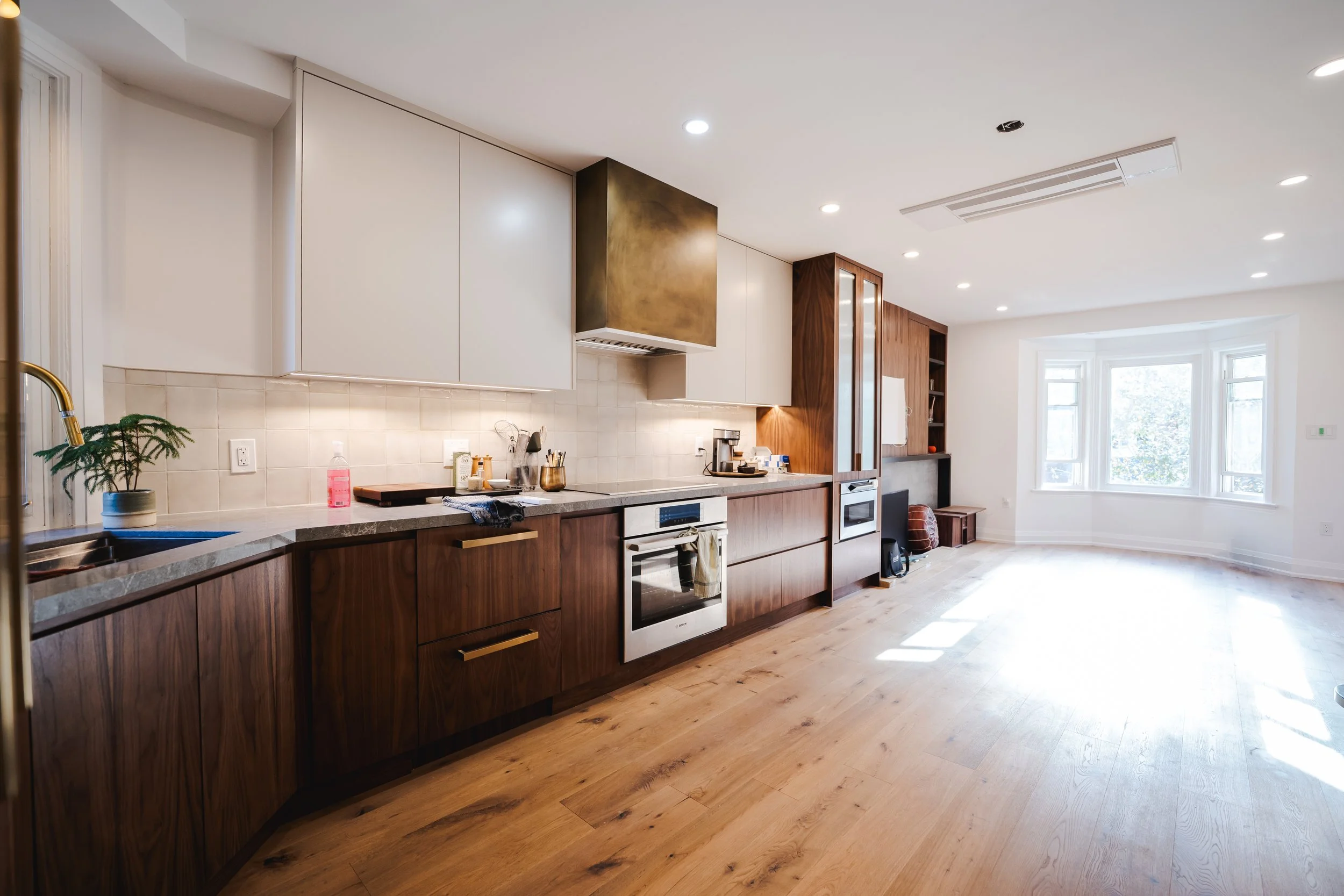
Kitchen Renovation in Downtown Toronto done in 2023. Interior Designer: Studio1NINE1
